What Can You Do with a Biology Degree?


When kids are asked what they want to be when they grow up, answers like marine biologist and zoologist are common. Many of those dreamers do follow through. According to the U.S. Bureau of Labor Statistics (BLS), more than 3 million people in the U.S. workforce held a biology degree in 2023 and had a $75,000 median annual salary.
So, exactly what can you do with a biology degree? With biology shaping fields as diverse as healthcare, conservation, and biotechnology, a strong foundation in biological concepts and principles opens doors to a wide range of careers.
What Does a Bachelor’s Degree in Biology Entail?
At its core, biology is the study of all living organisms, from the smallest microorganisms to the largest animals on Earth. A bachelor’s degree in biology prepares students to understand life at every level, equipping them with scientific knowledge and practical skills. In addition to mastering core biological concepts and the scientific process, students gain research experience and practice communicating their findings via written and oral reports.
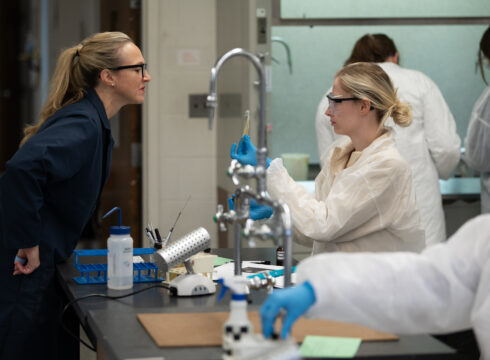
Beyond the core curriculum of biology, including chemistry and math, students can tailor their studies with electives in areas such as biochemistry, marine biology, and human anatomy. Many programs also emphasize applied learning through research projects, lab work, and internships.
A bachelor’s degree in biology typically takes four years to complete for full-time students, while part-time learners may take longer.
3 Careers to Pursue with a Biology Degree
Because biology is such a wide-ranging field, graduates can pursue many different paths. Some choose teaching, while others become biological technicians or conservationists. A bachelor’s in biology is also a common starting point for advanced study, leading to careers in medicine, veterinary science, pharmacology, and related professions.
Ultimately, what you do with a biology degree depends on your interests and goals. Here are three occupations to consider. Note that some occupations may require additional education and training.
Wildlife Biologist
Wildlife biologists study animals and their ecosystems. They conduct experimental studies to observe and research animals, analyze their biological data, organize and implement breeding programs for endangered or threatened species, monitor wildlife populations, and study the impact of human behavior on animals. They then use this research to develop programs that stop or prevent harm to animals and their ecosystems.
- Education: A bachelor’s degree in biology or a related field is typically required for entry-level positions. A master’s degree may be needed for higher-level projects and jobs, while a PhD is generally required to lead research projects.
- Skills: Wildlife biologists must be detail-oriented and have the ability to notice subtle changes in animal behavior. They also need strong critical thinking and problem-solving skills to turn research into actionable conservation strategies. Because they often work in teams and present their findings to the public, communication skills are essential.
- Career salary and outlook: According to the BLS, the median annual salary for a wildlife biologist was about $72,900 in 2024. Employment is projected to grow 2% between 2024 and 2034, which equates to around 1,400 new positions each year in that time.
Conservation Scientist
Conservation scientists study, manage, and protect natural resources. They often work with private landowners, government agencies, and public institutions to run research projects and advise on sustainable land use. Their goal is to balance human needs, such as farming and ranching, with the health and stability of natural ecosystems.
- Education: A bachelor’s degree in biology, natural resources, forestry, or a related field is typically required. Some states also require professional licensure. Experience with Geographic Information System (GIS) technology and computer modeling is increasingly important.
- Skills: Conservation scientists need strong analytical and problem-solving abilities to evaluate data and propose sustainable solutions. Clear communication is also essential, and conservation scientists should be physically prepared for fieldwork that can require long hours outside in challenging terrain.
- Career salary and outlook: According to the BLS, the median annual salary for a conservation scientist was about $69,000 in 2024. Employment is projected to grow 3% between 2024 and 2034, equalling around 3,600 new openings each year.
Microbiologist
Microbiologists study microorganisms, such as bacteria and fungi, to understand how they grow, what they do, and how they impact their environments. They maintain cultures, conduct experiments, classify new microorganisms, and analyze how microorganisms affect humans, animals, plants, and the environment. Their findings are crucial for combating infectious diseases.
- Education: A bachelor’s degree in biology or microbiology is required for most entry-level jobs. Advanced roles in specialized fields such as bacteriology or virology often require a master’s degree, and many research positions prefer or require a PhD.
- Skills: Microbiologists must be detail-oriented, able to notice subtle changes in cultures, and draw logical conclusions from experiments. Because research often involves trial and error, persistence and self-motivation are critical. Microbiologists should be communicative leaders, as they often oversee biological technicians’ work.
- Career salary and outlook: According to the BLS, the median annual salary for a microbiologist was about $87,300 in 2024. Employment is projected to grow 4% between 2024 and 2034, which means there will be an estimated 1,700 new openings each year.
Turn Your Passion for Biology into an Impactful Career
From defending us from infectious diseases to protecting endangered species, biology graduates make a meaningful difference. With a biology degree, you can pursue work that impacts individuals, communities, ecosystems, and the world as a whole.
At New England College (NEC), the Bachelor of Science (BS) in Biology program helps students go beyond the basics. After mastering the core concepts, students can explore specialized areas of interest and prepare for careers in different fields of biology. NEC emphasizes hands-on experience, offering opportunities such as the Summer Undergraduate Research Program in federally funded labs and the Tropical Marine Biology course, where students study reefs and Mayan ruins in Belize.
Discover how choosing NEC’s bachelor’s program in biology can make the world your classroom—and your future workplace.
Learn More
Apply to NEC
Explore Academic Degree Programs
Read More NEC News