
How to Get Your RN License in New Hampshire
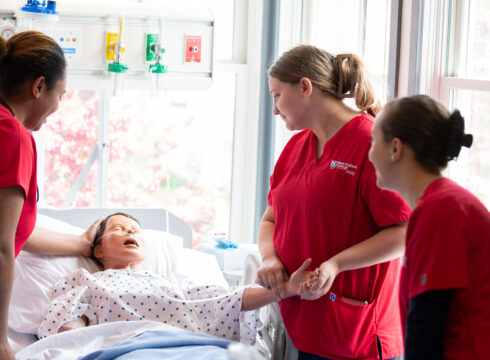


Nursing can be a lucrative and rewarding career path to pursue, impacting individuals and communities. Students considering becoming registered nurses (RNs) in New Hampshire should understand how to get an RN license in the state and the potential opportunities it can present. Obtaining licensure can lead to a secure, dynamic career with many opportunities for advancement.
By completing a foundational program such as a Bachelor of Science in Nursing (BSN), graduates can build a well-rounded foundation in nursing and gain an introduction to different nursing specializations and advanced career options.
What Is a Registered Nurse?
RNs are medical professionals who provide direct patient care. They coordinate care, educate patients and their families about treatment plans, and manage other aspects of bedside care. Some RNs care for certain populations or work in specialty areas:
- Neonatal nurses provide care to newborn infants.
- Critical care nurses work in intensive care units (ICUs).
- Cardiovascular nurses provide care to patients with heart disease or other cardiovascular issues.
RNs may work in hospitals, public and private practices, community organizations, and government agencies, helping patients address and manage their medical concerns.
Nurses may perform various daily responsibilities, including:
- Assessing patient health
- Monitoring patients
- Administering medications
- Coordinating treatment plans
- Working with other medical professionals to ensure that patients receive the highest quality of care
- Recording patient information
- Providing healthcare education and support to patients and their families
How to Get Your RN License in New Hampshire
Beginning a career in nursing involves a combination of education, practical workplace experience, and licensure or certification. Students interested in learning how to get their RN license in New Hampshire can follow a few key pathways.
Education
Prospective RNs should complete their undergraduate nursing education—either an Associate Degree in Nursing (ADN) or a BSN. While an ADN can generally be completed faster than a BSN, it’s less intensive, and it provides a more condensed education. By contrast, a BSN may offer prospective nurses a more in-depth, holistic foundation that better prepares them for the demands of the role.
Many advanced degree programs also require that applicants have a BSN before applying. Additionally, as the general expected standard for nursing education continues to rise, many facilities prefer BSN graduates over ADN graduates. In fact, the American Association of Colleges of Nursing (AACN) reports that 72% of employers prefer BSN graduates.
Examination and Certification
To be eligible to practice, RN graduates must:
- Pass the National Council Licensure Examination for Registered Nurses (NCLEX-RN)
- Apply for certification through the New Hampshire Board of Nursing
- Undergo a criminal background check and submit the required documents and transcripts
Graduates becoming RNs in New Hampshire should know that the state is part of the Nurse Licensure Compact (NLC). This gives nurses from participating states a singular multistate license and allows them to practice in any state within the NLC. Graduates licensed in a state outside the NLC must transfer their licensure to practice in New Hampshire.
Registered Nurse Salary and Career Outlook
According to the U.S. Bureau of Labor Statistics (BLS), RNs made a median annual salary of $93,600 as of May 2024.
RNs are in high demand across the country. With factors such as many nurses reaching retirement age and a shortage of nursing faculty to train new candidates, opportunities for those interested in the nursing profession are growing.
The BLS reports that overall employment for RNs is expected to grow by 5% between 2024 and 2034. This rate is faster than the average for all occupations and is expected to result in approximately 189,100 additional openings for RNs each year during that period.
Advanced Practice Nurse Salary and Career Outlook
BSN-educated nurses can pursue further education, allowing them to move into advanced practice roles with competitive salaries. The BLS reports that nurse anesthetists, nurse practitioners (NPs), and nurse midwives—all advanced practice roles—earned $132,050 as of May 2024 and are projected to experience 35% career growth between 2024 and 2034.
Pursue a Fulfilling Career in Nursing in New Hampshire
For students looking to become RNs in New Hampshire, finding the right education can be the first step. Earning a BSN can provide you with the foundation for a successful career in nursing and pave the way for advancement into higher-level roles.
If you want to obtain your RN license in New Hampshire, consider the BSN program from New England College. With the option to complete the program in as little as 32 months while incorporating hands-on training through paid immersive clinical experiences, you can gain the skills and knowledge to become a nurse on an accelerated timeline.
Find out more about how NEC’s BSN program can help you become a well-rounded nurse prepared to address the complexities of healthcare.
Learn More
Apply to NEC
Explore Academic Degree Programs
Read More NEC News